
Whoa! I know that sounds bold. My instinct said “just another extension,” and I almost closed the tab. But then I dug in deeper, poked around the UI, and something felt off about the usual wallet flow—so I kept going. At first it was curiosity. Then it became a mild obsession.
Seriously? Yep. I’m biased, but in a useful way. I build and test extensions for DeFi workflows, so I look for tiny UX choices that reveal larger security trade-offs. Initially I thought Rabby would be just another Ethereum wallet, but then realized it treats approvals and gas management differently, and that shifted my view. Actually, wait—let me rephrase that: Rabby’s approach to approvals and batching made me re-evaluate how I manage approvals across multiple chains and dApps.
Hmm… this part is important. The UI nudges are subtle. They reduce accidental approvals. On one hand the interface is minimalist and approachable. On the other hand, it gives power users deep control when needed, which is rare.
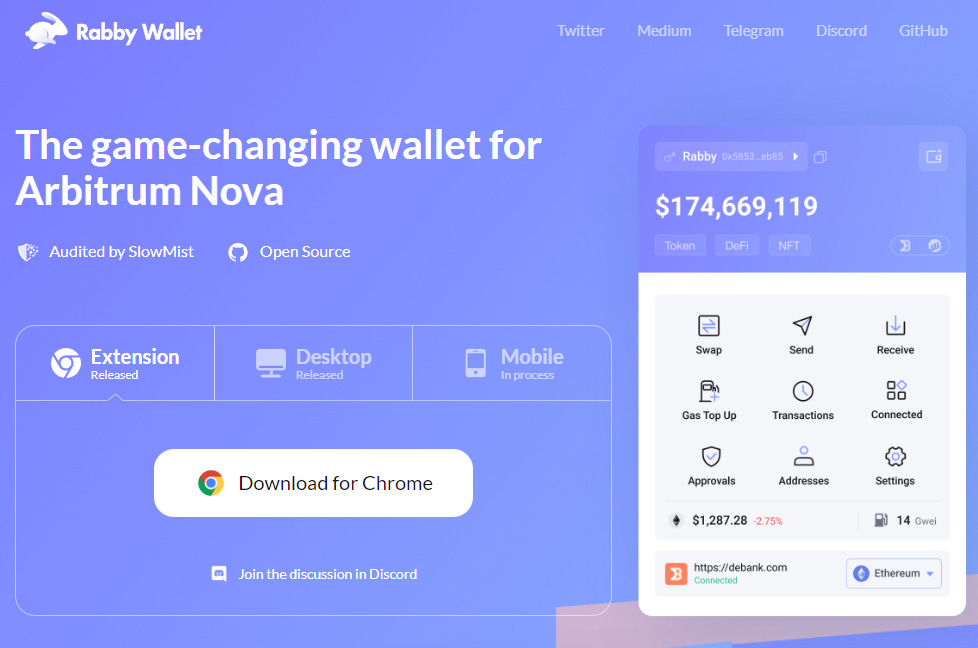
How I installed and tested Rabby
Okay, so check this out—if you want to try it, grab the official installer from the recommended source: rabby wallet download. Quick note: always verify you’re on the right page and not a lookalike. When I first grabbed it I triple-checked the URL, and you should too—no exceptions. My instinct said to verify extension permissions before enabling any sites. That saved me time later.
Here’s what bugs me about many wallet installs. They request broad permissions and you click accept because you want to start trading. That habit is dangerous. Rabby asks for what it needs and then offers granular controls, which helped me reduce attack surface during testing. Also, there are tiny convenience features like session-based permissions, and those made a big difference when I hopped between testnets and mainnet.
At a glance Rabby looks familiar. The tab bar, the network switcher, the transaction history—standard stuff. But the approvals panel is where it earns its keep. It groups approvals by dApp and token, and that grouping saved me from approving unlimited allowances multiple times. On one occasion I caught a stale allowance that a dApp had requested weeks earlier, and I revoked it immediately—very very satisfying.
Initially I worried about multisig and smart contract complexity. Then I realized Rabby supports more advanced signatures in a way that is approachable for everyday users. On deeper inspection the extension uses a combination of local encryption and browser storage that keeps keys only on your device, and that design struck a practical balance between security and convenience. I’m not 100% sure about every cryptographic detail, and to be honest, I didn’t audit the code myself—but the architecture aligns with best practices I’ve seen elsewhere.
There are trade-offs, though. The convenience layer introduces more UI complexity for newcomers. Some screens expose advanced toggles that could confuse people. (oh, and by the way…) that’s where careful onboarding matters. A friend of mine almost sent a transaction with the wrong gas settings because they skipped the tooltip, and that little bugbear of UX is still there.
My testing routine is simple. I set up a fresh profile, create a new seed, then test recovery and export flows. Why? Because the recovery UX often breaks under real stress when people screw up. Rabby’s seed export and QR options worked fine for me. It prompted warnings at the right times and didn’t hide the most critical steps inside menus. Still, the warning texts could be clearer for complete rookies.
On performance Rabby felt snappy. Transactions propagate quickly, and the gas estimation is conservative enough to avoid constant re-submissions. That said, edge cases exist—like when a dApp tries to bundle multiple calls into a single contract interaction, the estimation sometimes underpriced the complex gas usage. I reported a couple of these quirks, and the team was responsive in the forum, which counts for something in my book.
Security notes—short list. Rabby isolates sites via per-site permissions. It warns on token approvals and offers a revoke page out of the box. It also supports hardware wallets, so you can combine convenience with cold-key security. On the flip side, if your device is compromised, no browser extension can fully protect you. Remember that. I’m saying the extension lowers risk, it doesn’t eliminate it.
One practical tip: use separate browser profiles for different threat levels. Keep a “hot” profile for day trading and a “cold” one for long-term staking and holdings. Rabby makes switching easy, and I use the feature to compartmentalize exposures. This workflow saved me from mixing test tokens with my main stash during a rushed test—small wins add up.
On multi-chain support Rabby is solid. It handles Ethereum and EVM-compatible chains with a consistent mental model, which reduces cognitive load. However, not all chains are equal—some RPCs are slow and that affects UX. When an RPC hiccups, Rabby surfaces the issue rather than silently failing, which is something that bugs me in other wallets. That transparency is a real plus.
Cost considerations? Free to install, but network fees still apply, obviously. The wallet doesn’t charge extra fees. If you’re used to mobile wallets that error on low gas, Rabby’s control over gas limits can feel empowering, but it also adds responsibility. If you mis-set gas, you may end up costing yourself, so the balance between control and safety matters.
Community and support matter. Rabby has active channels and an engaged user base. I asked a nuanced question about batch transactions and got a helpful reply from a developer within a day. That kind of responsiveness is rare. On the other hand, documentation can be terse for advanced flows; I had to stitch answers from forum posts and PR notes. Patience required—though the project is improving fast.
FAQ
Is Rabby safe for managing serious funds?
Short answer: yes, with caveats. Use hardware wallets for large holdings and keep device security tight. Rabby supports hardware integration and offers good permission controls, but physical device security and personal practices matter more than the extension itself.
Can I recover my wallet if I lose my device?
Yes. Seed phrases still apply. Back up your phrase in a secure, offline place. Rabby’s recovery flow worked predictably during my tests—still, test your backup once so you’re not surprised later.
Does Rabby work with many dApps?
Mostly yes. It interoperates with popular dApps, and handles approvals in a way that reduces accidental unlimited allowances. There are edge-case dApps that require manual setup, but those are exceptions, not the rule.